
e38 CD / Die schönsten japanischen Lieder
Description
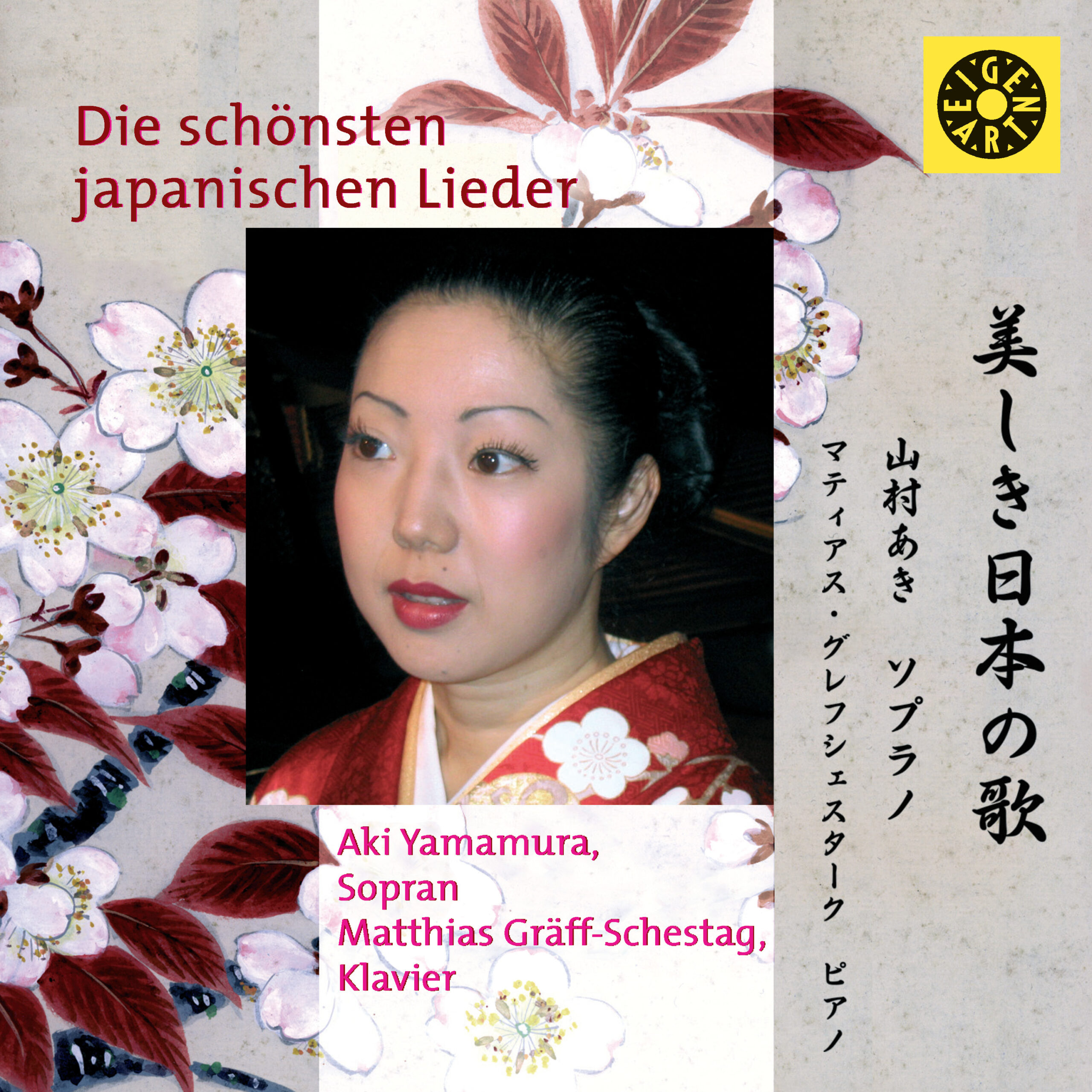
The young, previously unknown Japanese soprano Aki Yamamura together with her piano accompanist Matthias Gräff-Schestag conjures us away to the world of Japanese songs. Few other oriental cultures were influenced musically by Europe like Japanese culture was. And yet these Japanese songs have retained their individual character, not only thanks to different musical elements such as pentatonic tunes or melodies with numerous semitones, but also quite simply due to the language which is quite alien to western ears. Occasionally the melody of the Japanese language introduces unusual rhythms into songs which might sound “usual” in their form. Often this music radiates a certain melancholy or charmingly contemplative ingredients. Quite obviously a Japanese artist was needed to convey these subtle nuances, and Aki Yamamura has succeeded masterfully. This production is a gem to enrich anyone interested in song.
3 reviews for e38 CD / Die schönsten japanischen Lieder
You must be logged in to post a review.

Pizzicato –
Japanese art songs from the past 130 years form the program of this CD. The soprano Aki Yamamura, born in Nara (Japan) and trained both in her homeland and in Germany, has personally selected songs by composers such as Rentaro Taki, Kunihiko Hashimoto, Kosaku Yamada, and Ikuma Dan. Many of these pieces are shaped by Western influences, mostly French or German, which are combined with Japanese idioms. They deal with love and its loss, the longing for what has vanished, and the beauty and melancholy of autumn—and they are as delicate and pure as the flowers, blossoms, clouds, and children they depict.
Aki Yamamura captures these moods in beautiful interpretations, giving the songs an irresistible charm and sonic magic that one gladly surrenders to for fifty minutes.
RèF
Darmstädter Echo –
With the opening of Japan in the 19th century, Western influences also reached Japanese music. This is documented in the recording “The Most Beautiful Japanese Songs” with soprano Aki Yamamura, who studied at the Darmstadt Academy of Music, and her careful, subtly accented piano partner Matthias Gräff-Schestag, who teaches chamber music at the same academy.
Yamamura has a distinctly beautiful and very natural-sounding voice, which perfectly suits these romantically sentimental songs, sometimes tinged with musical theatre or jazz-like coloring.
hz
Hofer Anzeiger –
Melodious from a distance
Those who a year ago could hardly believe their ears at the “Blue Monday” at Theater Hof can now be assured: it really exists—the Japanese art song with Western traits. In May 2006, Aki Yamamura, a member of the opera chorus, appeared in person before the audience in the studio of the house, wearing a red-white-gold kimono; now she follows this with a CD. Not only does the native Japanese soprano honor the repertoire with an impressively substantive and richly shaded voice; amidst all the repeated recordings of the same Schubert, Mahler, and Brahms repertoire, her album also lays claim to uniqueness and singularity. As co-creator of the project and accompanist both on stage and in the recording studio, Matthias Gräff-Schestag provides shimmering, colorful piano impressions with subtle individuality; he is also a connoisseur of the distant country and its music. He was the first in Germany to publish a songbook with pieces from the Japanese Empire.
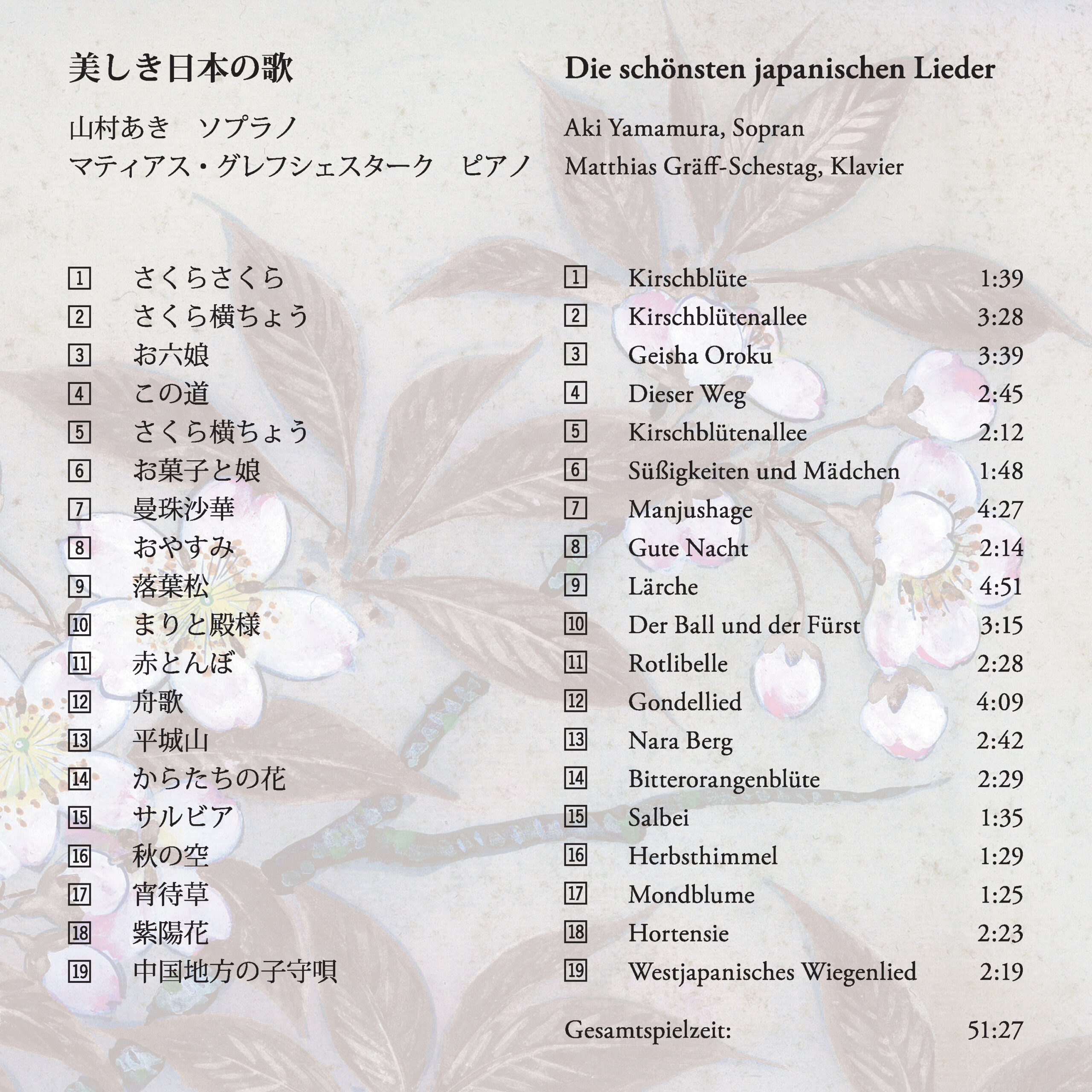
The songs speak of cherry blossoms and moonflowers, autumn skies, and the sweetness of young girls. But they do not dwell on clichés of Geisha or Samurai folklore. Explicitly conceived as art songs, the nineteen contributions on the album occasionally echo German models such as Strauss and Schumann or the French, like Fauré, and sometimes even flirt with operetta or swing. Most convincingly, however, are those songs in which originally Japanese music slips into Western garments. They attract the local listener while keeping him at a respectful distance. The accompanying booklet, which commendably explains the “bridge between Japan and Europe” and provides all song texts with translations for reading along, makes this experience easier. Finally, the composers are briefly introduced. This is essential: names like Yamada, Hatanaka, Dan, and Kobayashi are likely to overwhelm local listeners and even connoisseurs, unlike Schubert, Mahler, or Brahms.
Michael Thumser