
073 CD / In the Shadow of Brahms Vol. 2
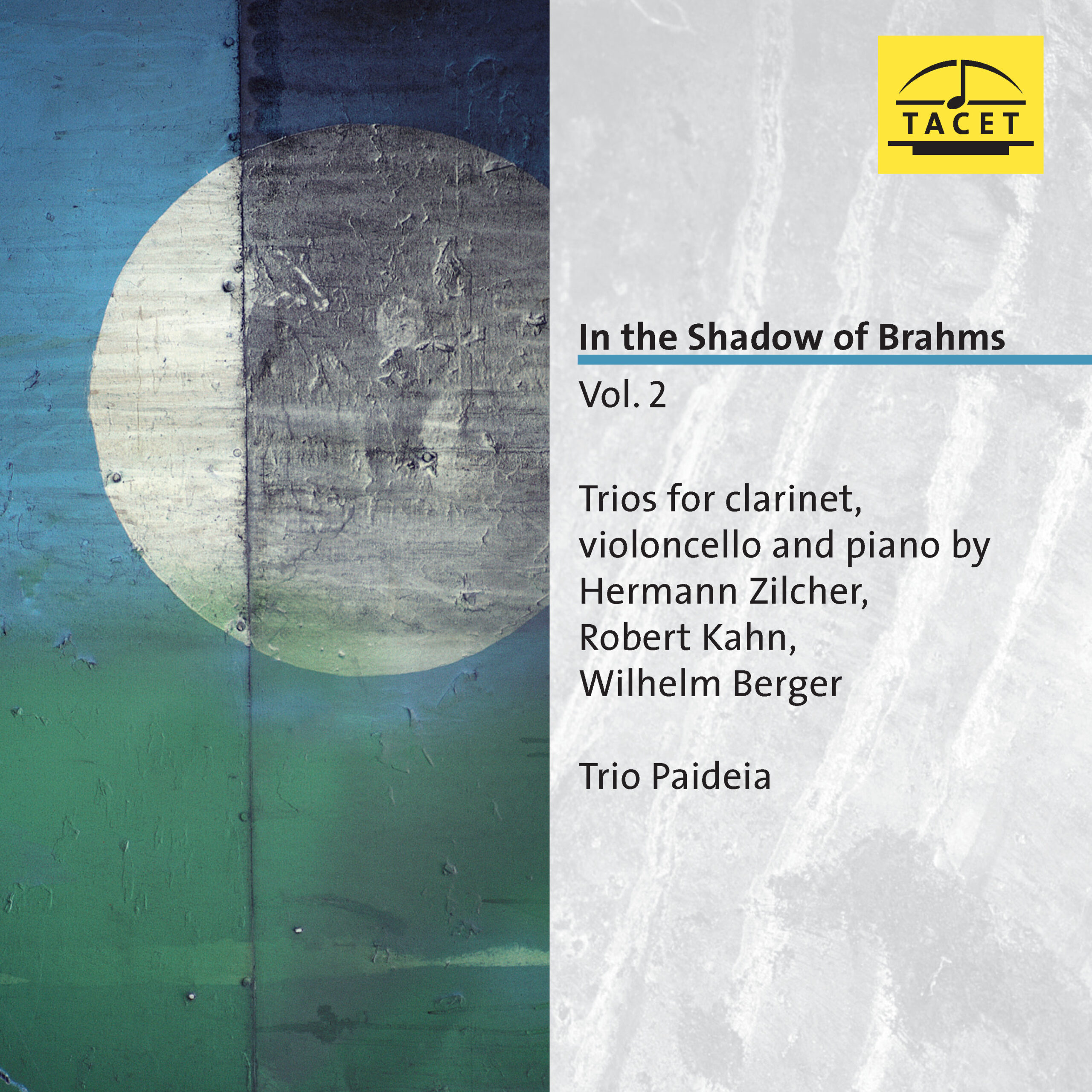
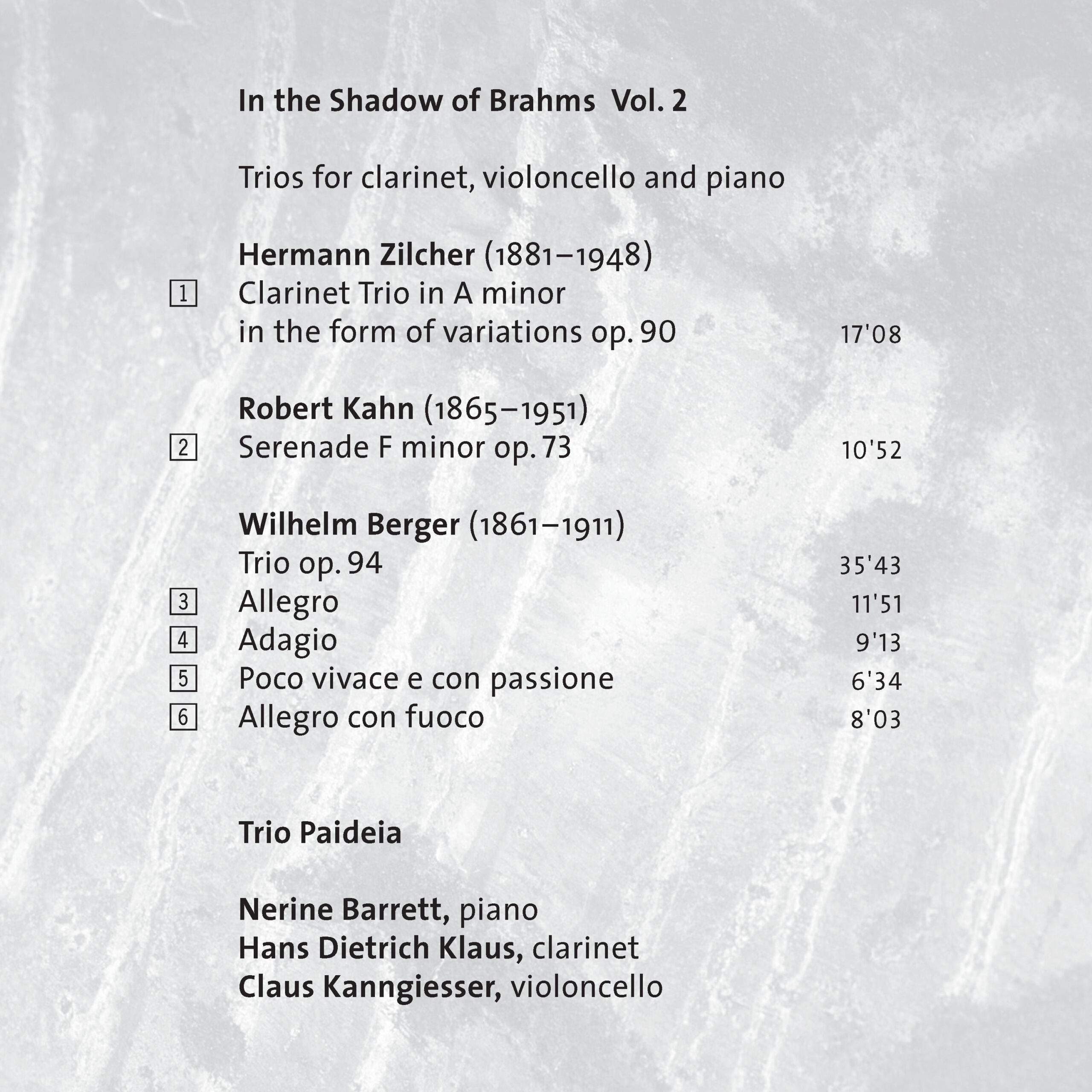
In the Shadow of Brahms Vol. 2
Trios for clarinet, violoncello and piano by
Hermann Zilcher, Robert Kahn, Wilhelm Berger
Trio Padeia
EAN/barcode: 4009850007302
Description
"The mature playing by the Trio Padeia, technically and musically, makes this CD a real find." (Stuttgarter Zeitung)
4 reviews for 073 CD / In the Shadow of Brahms Vol. 2
You must be logged in to post a review.







Aachener Zeitung –
… Treasures of chamber music with clarinet—these three artists have unearthed and brought to light through beautiful playing and compelling interpretation. Who even knows composers like Juon, Zilcher, Kahn, or Berger? The lexicons ignore them, and the record catalogs have virtually nothing on them—but their trios, performed as they are here, are truly magnificent. … If these two CDs mark a debut, then it’s a good one—more than that, a very good one. Can we hope for Vol. 3 or even Vol. 4?
Fanfare-Magazin –
... The Trio Paideia is a fine group. The clarinet of Hans Dietrich Klaus produces a nice, warm, and creamy tone, and his playing is replete with virtuosity in the finale of Berger. Claus Kanngiesser′s cello tone is nicely focused, with the faultless intonation that brings much delight in the long solo section that opens the second movement of the Berger. With Nerine Barrett always taking care that the piano does not become the dominant instrument, the trio shapes and shades the music in a way that makes the most of its many felicities, the hushed momentshaving a considerably beauty of tone, all of it supported by reproduction that provides a very natural sound and balance, with the instruments placed some distance from the microphones to provide a sense of space around the trio.
David Denton
Classics Today –
9/10 Reference Recording - "This one"
Ever since Brahms penned his masterful trio for clarinet, cello, and piano, numerous composers have been attracted to the rich timbral possibilities offered by this instrumental combination. The four-movement Trio by Wilhelm Berger (1861-1911) offers a less upholstered version of Brahms′ grounded cross-rhythms, plus felicitous registral intertwining between the cello and clarinet. Too bad the melodies aren′t especially memorable. The earnestly crafted but harmonically monotonous Serenade in F minor by Robert Kahn (1865-1951) seems longer than its actual 11-minute length. But the Clarinet Trio in A minor in the form of variations, composed by Hermann Zilcher (1881-1948), is an absolute gem--indeed, a masterpiece waiting to be dispicsed. The work is more Franco-Russian than German in thematic and harmonic character. It boasts gorgeous, translucent textures and wistful lyric strength, culminating in an unexpected light-hearted coda.
While Hans Dietrich Klaus′ high clarinet notes have a pinched quality that prevents his long lines from fully soaring, he is no less sensitive a musician than his splendid partners. The Trio Paideia makes cogent cases for these pieces, and its flowingly dovetailed ensemble work will be admired by anyone interested in the fringes of the chamber repertoire.
Jed Distler
Stuttgarter Zeitung –
Truly No Minor Masters
Johannes Brahms was already considered a rather backward-looking composer during his lifetime—so how much harder must it have been for those composers who, well into the new century, remained devoted to the old style? Composers like Wilhelm Berger, Hermann Zilcher, and Robert Kahn, whose works for clarinet, cello, and piano are presented by the Trio Paideia on a CD with the evocative title "In the Shadow of Brahms" (TACET 73). Of course, the label of "forgotten minor masters" is quickly applied—and perhaps rightly so. But anyone who listens to these pieces without prejudice will be surprised by the magnificent music awakening from its slumber. Take Hermann Zilcher’s Trio in A Minor, for example: from an amorphous foundation, a simple theme emerges, undergoing the most diverse transformations across seven variations. The technically and musically mature performance by the Trio Paideia makes this CD a true discovery.