
074 CD / Die Röhre – The Tube
Description
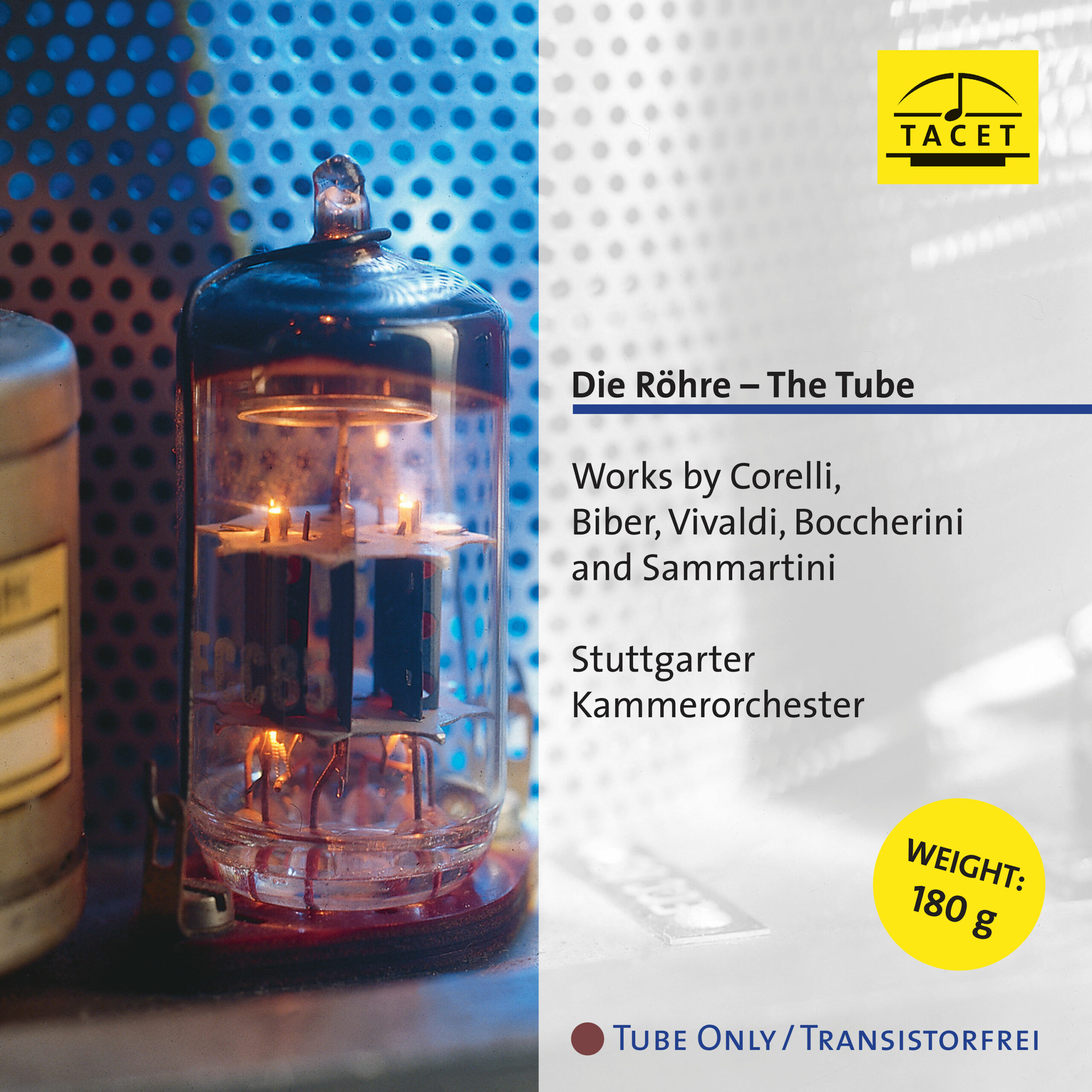
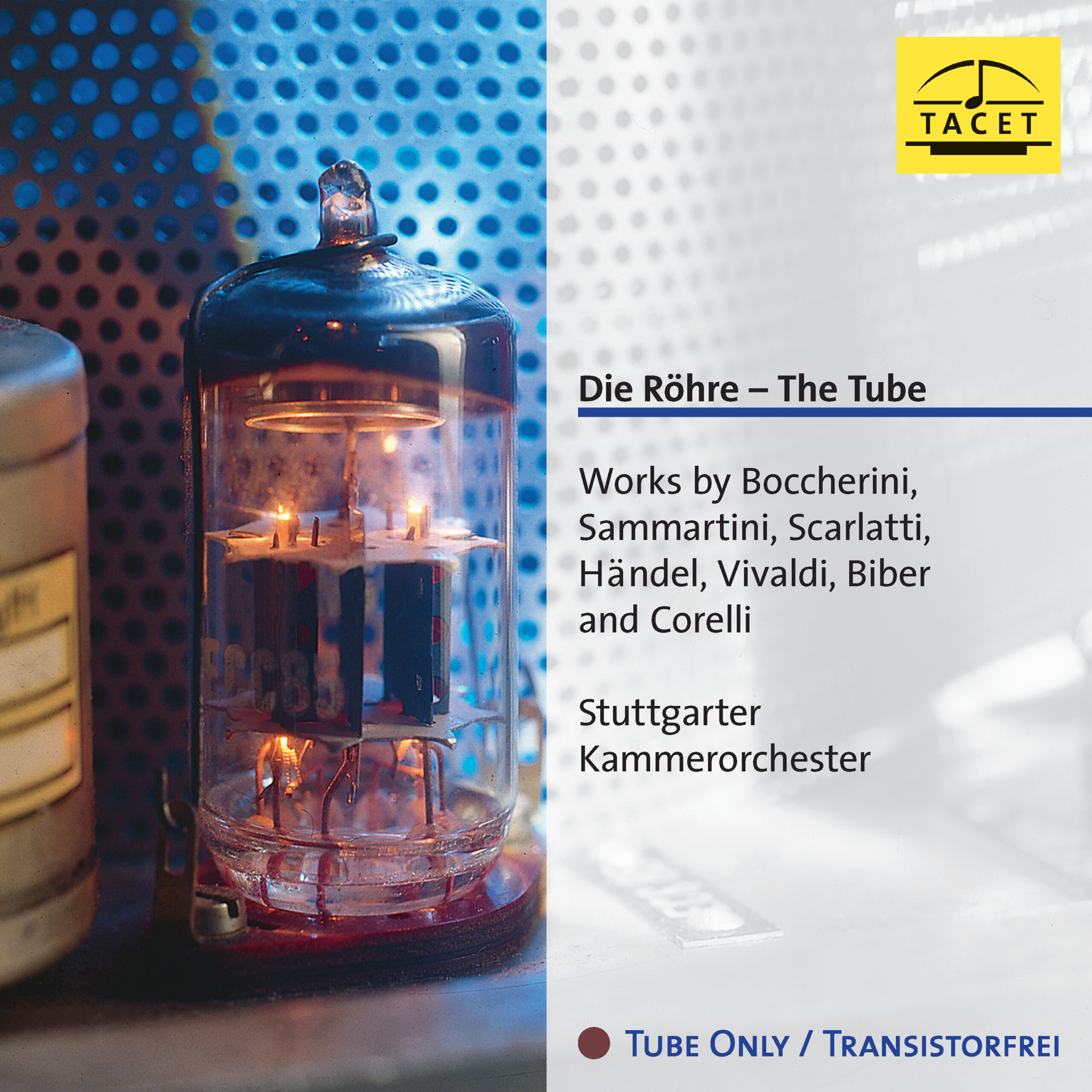
Over the past half-century the transistor has transformed our world. No computer or household gadget would be possible without it these days. As regards audio technology, our question was: did anything get lost on the way, and if so, what? And: a CD made without a transistor - is that really possible? Let us take a look at the signal chain...
7 reviews for 074 CD / Die Röhre – The Tube
You must be logged in to post a review.


Audiophile Audition –
The 17-member chamber orchestra plays without conductor and imbues these Baroque selections with a verve and burnished tone that sounds fresh and new. The musical sound effects and tone-painting of both the Biber battle piece and Boccherini’s Night in the Madrid Streets are the sort of thing not usually heard in early music and they add considerable interest to the program. The string tone is excellent; I believe this ensemble uses standard violins instead of Baroque versions.
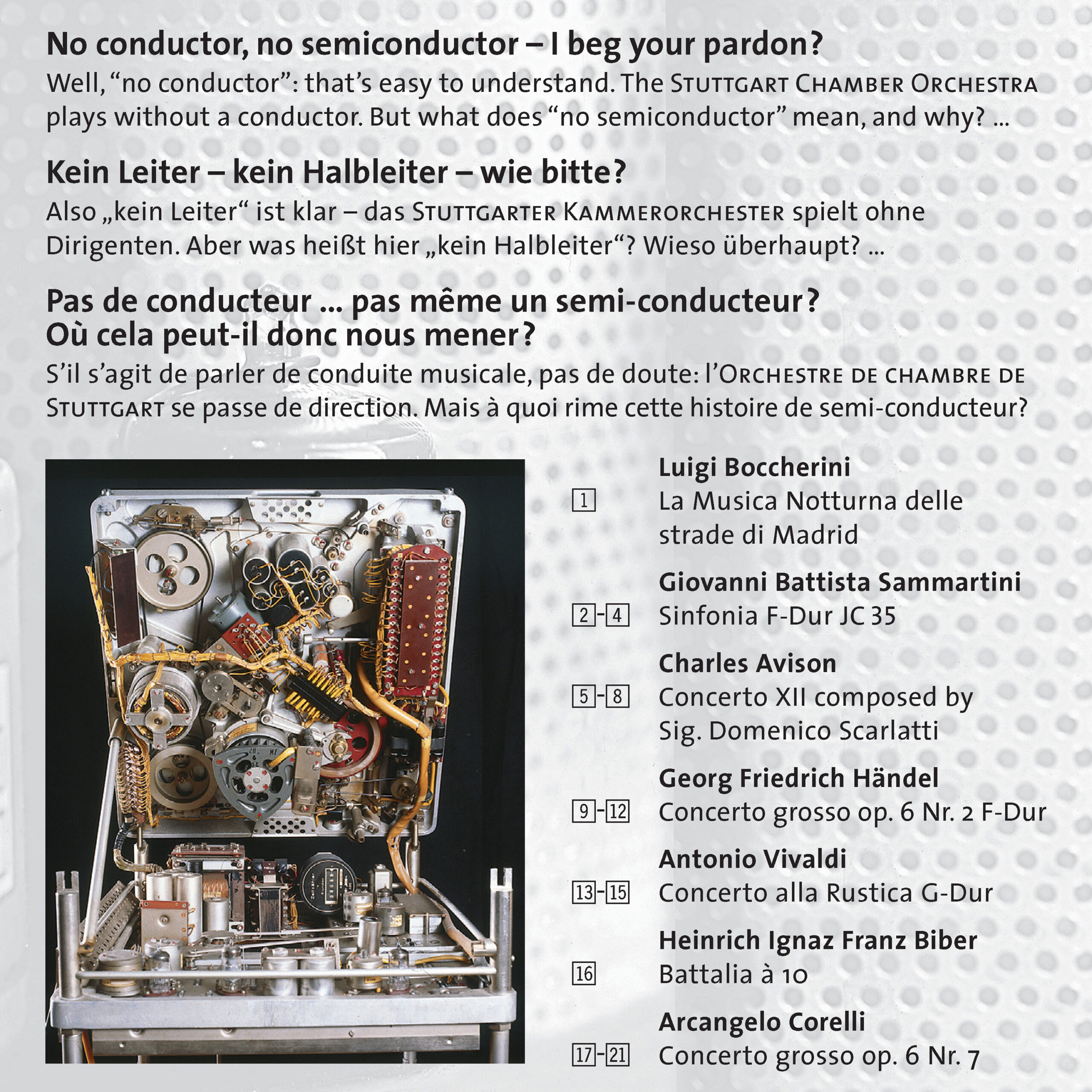
The recorder used was a refurbished Telefunken M5, so vintage that it was an original mono recorder with a second circuit level bolted onto it to create a stereo machine. A Neumann M49 vacuum tube mike dating from 1949 was used. A fine effort with plenty of both musical and technical interest.
John Sunier
Rondo. Das Klassik & Jazz Magazin –
You could make a pun about the title: the Stuttgart Chamber Orchestra really steps on the gas, and the listener is left staring down the tube. But first, that would be nonsense, and second, it wouldn’t be funny. When it comes to the Neumann M49 microphone, the V 72 amplifier, the W 85 control unit ("built from discrete resistors!"), and the Telefunken M5 tape machine—well, in this case, I am staring down the tube. From what I’ve gathered (or think I’ve gathered), this production replaces the modern semiconductor—found in almost every electronic device today—with the tube-based, transistor-free recording technology of the early 1950s, through a highly elaborate process. Sure, everything was better back then. But the technology too? After hearing the acoustic result, the answer is a resounding yes! I’ve never experienced the Stuttgart Chamber Orchestra—or any artist pressed onto CD, for that matter—with such spatial depth, such plasticity, such immediacy. The Swabians, who rose to global fame with Karl Münchinger in the 1960s, seize the moment of acoustic opportunity—without a (semi)conductor—and deliver a captivating journey through 18th-century music. At first, you might think Boccherini’s Night Music of the Streets of Madrid belongs in the 20th century, so naturalistically does it evoke the southern soundscape. Biber’s Battaglia also has its fair share of "oohs" and "aahs." While the rest of the concerti grossi by Handel, Corelli, and others may not be groundbreaking repertoire discoveries, they do showcase an ensemble performance of compelling precision. And, of course, there’s "the tube." So: back to the future!
Christoph Braun
Klassik heute –
… Played through my ancient BW 801 speakers—with their nostalgic tube technology—the sound is utterly captivating: rich, three-dimensional, sonorous, incredibly colorful, and almost luminous from within, just like those glass tubes… Yet… Even the most impressive sound can’t change this: polished (and, of course, supremely confident) boredom remains polished boredom, no matter how enchanting it may seem.
Peter Korfmacher
Fono Forum –
Retro as Progress
… one of the most realistic classical recordings ever. How so? The question of whether the intoxicatingly natural and powerful sound stems from the semiconductor-free, analog recording or the equally meticulous and purist interpretation quickly fades while listening. The Stuttgart Chamber Orchestra performs the works of the Italian pre-classical era with delightful earthiness—Biber’s beer-soaked, grotesque Battalia is rendered onomatopoeically, and Handel’s Concerto grosso Op. 6 No. 2 unfolds in beautiful pastoral splendor. A baroque feast for the senses.
Uwe Schlink
Das Orchester –
A CD of Baroque music by Handel, Vivaldi & Co.: Original? Original! Because this new compact disc from the audiophile label Tacet packs a double punch—technically and musically. … It’s been a long time since a Baroque CD has come onto the market that is such a joy to listen to—“tube only,” the booklet advertises, or as you might say: “Baroque music unplugged.”
Wolfgang Birtel
Analog 1/2000 –
The Stuttgart Chamber Orchestra truly plays with captivating brilliance, rendering the question of whether historical or modern performance practice is "correct" utterly irrelevant. Along the way, they effortlessly prove that modern performance practice doesn’t have to be dull or homogenized… What’s left to say? Nothing but to wholeheartedly recommend this recording to you.
Gernot Weiser
NWZ –
For those who mourn the recording techniques of yesteryear: Baroque highlights performed by the Stuttgart Chamber Orchestra, under the evocative title "Die Röhre" (The Tube), captured with historic microphones
Hanns-Horst Bauer