
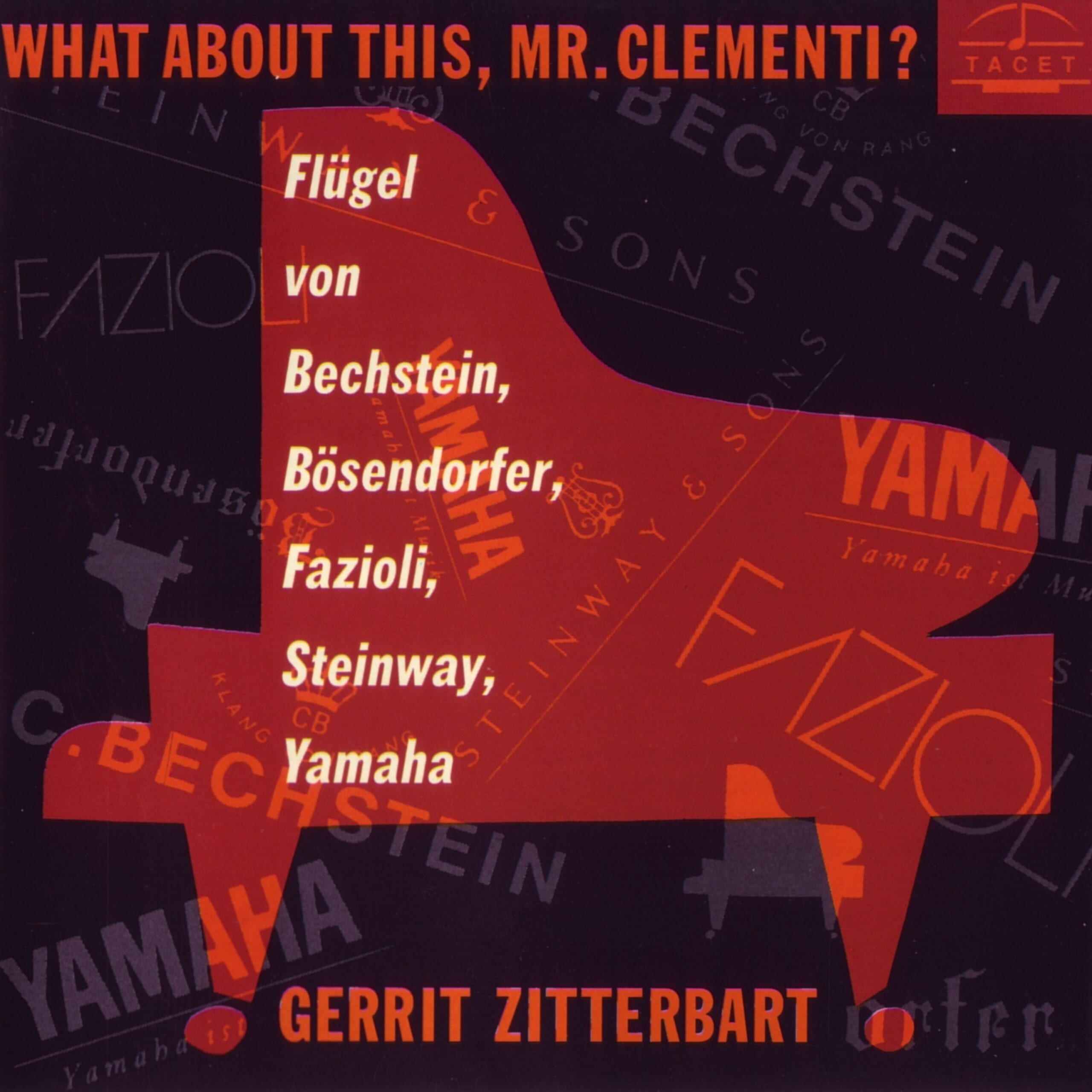
034 CD / What about this, Mr. Clementi?
Description
"Opinions can vary so much about the sound of a grand piano! Does it sound cold, or hollow, or full, or spiky, or dull, dry, tinny, glassy, silvery, or without any heart? [...] It’s high time to name the pianist who developed this attractive project together with his producer Andreas Spreer and performed it so brilliantly that one wants to go back to it time and again: it was Gerrit Zitterbart." (WDR 3)
5 reviews for 034 CD / What about this, Mr. Clementi?
You must be logged in to post a review.
image hifi –
A gimmick for listeners who can hear the grass grow? – Not at all. Gerrit Zitterbart finally directs the listener’s attention to an element that, amid all discussions of sound quality, interpretation, and technique, remains far too much in the background: what is made to sound is, first and foremost, the instrument itself. Here we encounter five individual instruments, each also presented with a work that brings out its particular strengths and suits its character best. Should one take the choice of Igor Stravinsky’s percussive piano music for the Steinway as a subtle jab at the global market leader? Incidentally, TACET also offers comparable CDs for lovers of the violin and the guitar.
Heinz Gelking
Fono Forum –
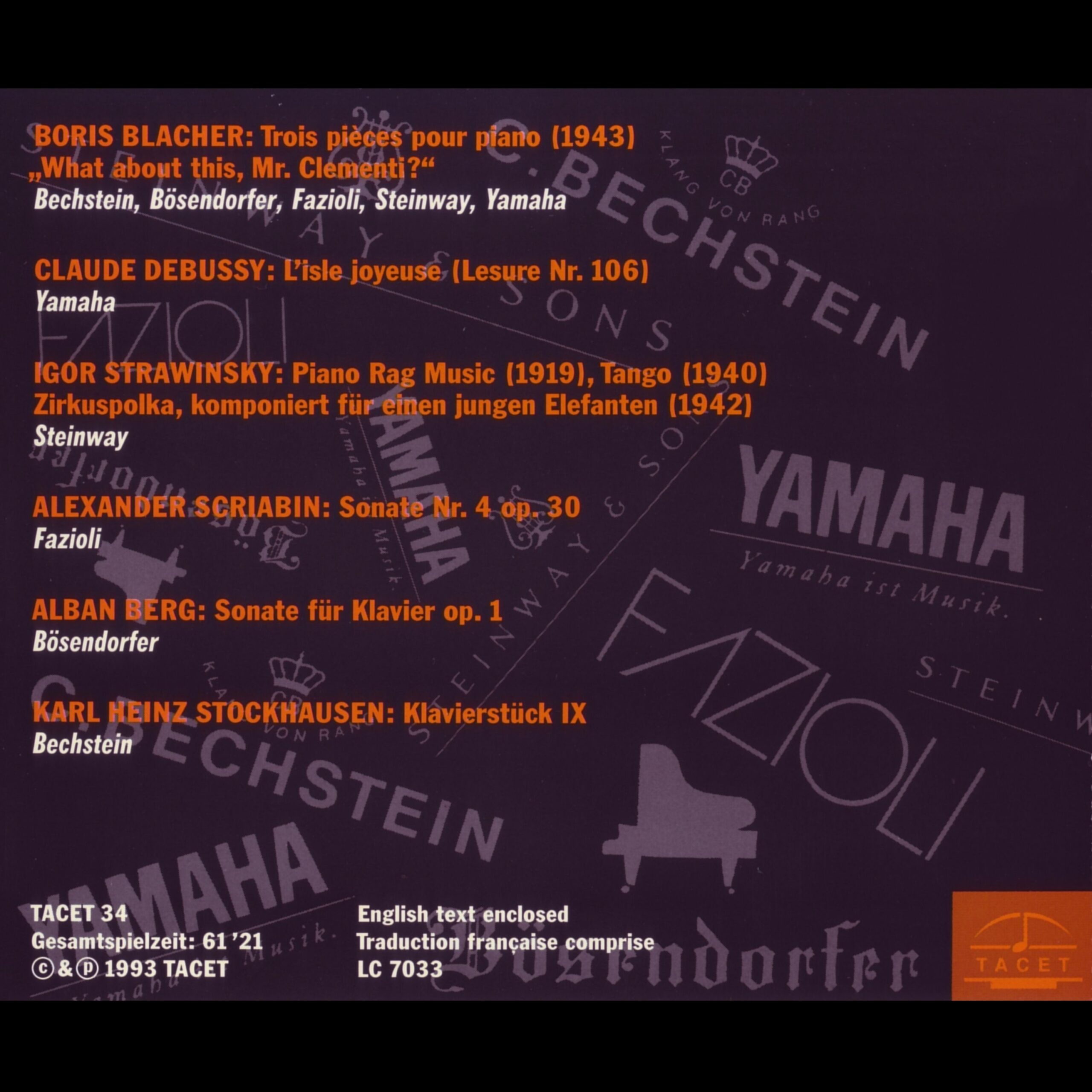
Comparisons of different instruments on recordings are nothing new to organists and violinists. The particular possibilities of the medium increase the chances of forming a judgment under the impression of differing tonal characters. With this music-didactic publication, however, TACET producer Andreas Spreer and Gerrit Zitterbart, one of his house pianists, go beyond a merely programmatic and instrumental juxtaposition. Only the compositions in the “main section,” performed on five grand pianos by Yamaha (Debussy), Steinway (Stravinsky), Fazioli (Scriabin), Bösendorfer (Berg), and Bechstein (Stockhausen), represent the normal case of a carefully considered diversity of equipment. Preceding them, however—and this is the disc’s masterstroke—are five presentations of the three tiny piano pieces by Boris Blacher from 1947. Jazz elements, hints of contrapuntal furrowing of the brow, and a touch of sensuality provide, within the tightest space, an ideal basis for the listener attuned to nuance to focus even more precisely on the distinctive qualities of the five instruments by means of a single sequence of movements.
Neue Musikzeitung –
That Gerrit Zitterbart is an excellent pianist can be heard on recordings and in performances with the Abegg Trio. But he is equally convincing as a soloist, as his most recent CD demonstrates. First and foremost, however, the concept of this recital deserves attention: the pianist sets not only compositions from our century side by side, but also five different grand pianos. He recorded the pieces by Boris Blacher on all five instruments, while for the other works he chose in each case the piano that seemed most appropriate to him. Here, the indirect comparison proves far more fascinating than the direct one, since the Blacher pieces really draw a distinct sonic profile only from the Bösendorfer model. What is truly impressive to hear, however—at a consistently high interpretative level—are the individual characteristics of the instruments in the rest of the program: the opulence of the Fazioli for the Scriabin sonata, which expands emphatically toward the end; the brilliant precision of the Steinway in Stravinsky’s stylized entertainment pieces; and the wealth of overtones and resonances of the Bechstein for Stockhausen’s sound visions. Only the Yamaha is not made to glow as fully as L’isle joyeuse would warrant. The pairing of Berg and Bösendorfer can certainly be regarded as ideal. Not only did the composer himself play a piano from the same maker; the darkly colored tone—soft and singing even in the upper register—corresponds perfectly to Berg’s op. 1, and Zitterbart underscores this with an interpretation that seems to look back in time, its agogics always firmly anchored in Berg’s own indications.
WDR –
Opinions can vary so much about the sound of a grand piano! Does it sound cold, or hollow, or full, or spiky, or dull, dry, tinny, glassy, silvery, or without any heart? [...] It’s high time to name the pianist who developed this attractive project together with his producer Andreas Spreer and performed it so brilliantly that one wants to go back to it time and again: it was Gerrit Zitterbart.
Musik und Theater –
Indispensable for every piano music fan.